

Escorted Backlogs and Asian Flows: The Gap Between U.S. Rhetoric and Reality in Hormuz
Optimistic rhetoric is no match for physical reality on the water.

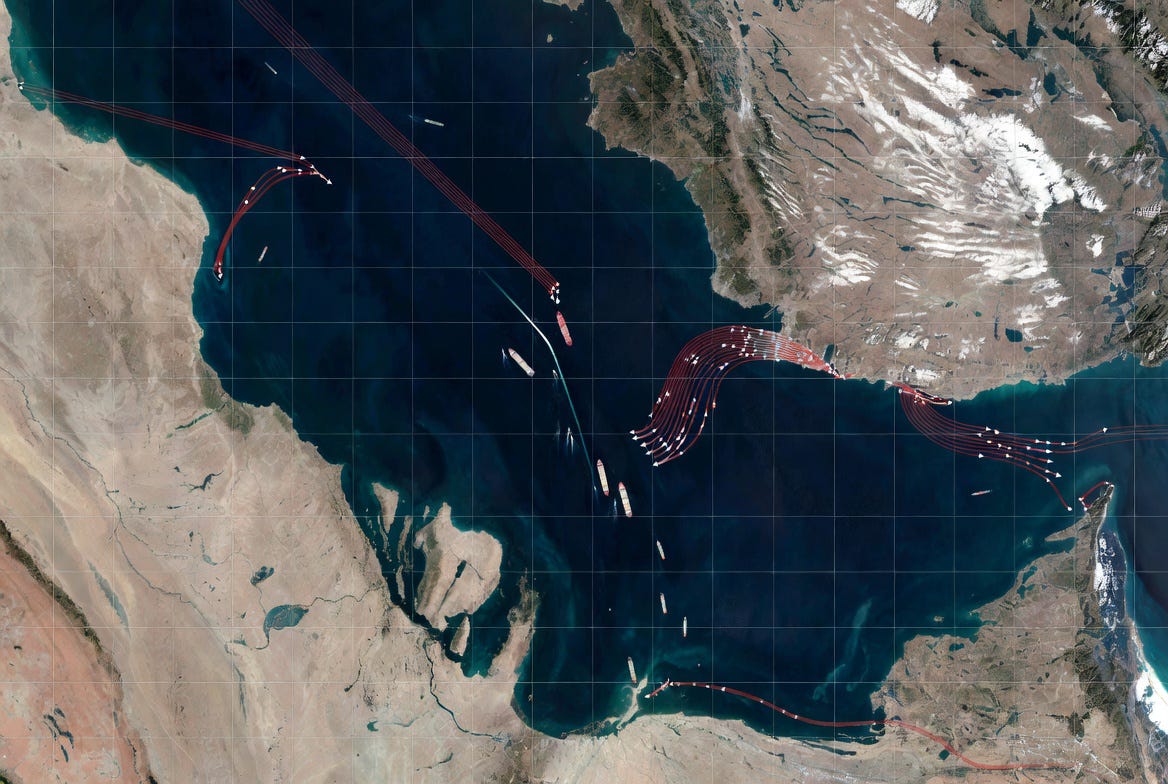
U.S. officials have repeatedly described the Strait of Hormuz as open and normalizing since the MOU was signed. The data shows something more limited: a narrow, escorted corridor that is moving backlogged oil but has not restored the reliable, high-volume commercial traffic that the global economy desperately needs.
Current Traffic Levels
As of early July 2026, total daily transits through the Strait have improved from wartime lows but remain suppressed. Recent reporting shows peaks of 70–109 vessels on stronger days in late June, yet averages often hover in the 25–55 range—well below pre-war levels of 130–140 vessels per day. Even during the strongest rebound periods, daily crossings remained materially below normal.
U.S. Navy coordination and escorts have supported a small number of VLCCs—typically in the low single digits per day—primarily clearing backlog. These movements remain overwhelmingly outbound (loaded tankers exiting the Gulf), while inbound traffic to load new cargo stays muted and is heavily dominated by Iran-linked shipping. This is not the two-way commercial flow that existed before the conflict, and it falls far short of the normalization suggested by U.S. media talking points.
Where the Limited Volumes Are Going
Of the non-Iranian-linked or commercially relevant crude currently moving out of the Gulf, the large majority continues to head to China and India. These two countries have absorbed most of the limited volumes—reportedly as much as 75% or more of resumed flows since the MOU—consistent with long-standing patterns where Asia has accounted for ~75–84% of Hormuz crude.
Japan is receiving minimal to negligible volumes on a consistent basis. South Korea and Europe are seeing very little of the current flow. The escorted corridor is primarily serving Asian demand rather than restoring broad global supply stability. Who receives the crude is just as important as the ability to move it out. Current allocations don’t bolster Western-aligned supply meaningfully, which reduces the economic benefit of an “open Strait” relative to the optimistic U.S. framing.
Scale in Context
Global oil consumption runs at approximately 103–104 million barrels per day. Before the conflict, the Strait of Hormuz normally carried 19–21 million barrels per day of crude and products — roughly one-fifth of global seaborne oil trade.
Even on better days since the MOU, volumes have recovered only partially. Early rebound phases saw flows around 2 million barrels per day, while stronger days in late June reached significantly higher levels — with some reports citing 17+ million barrels on peak days and multi-day averages climbing into the mid-to-high single digits (though still inconsistent). This is a meaningful improvement from wartime depths, but far short of the sustained 19–21 million barrels per day needed for stable supply.
Scale matters. Consider that 300 million barrels equals roughly three days of global supply — or six days if only half the world received it. Crude flows don’t work in perfect symmetry, but this shows that at global scale the big numbers being touted aren’t especially reassuring.
This is why durable economic improvement requires the Strait to be open and flowing on an ongoing basis. A one-time “flood of crude” does not solve persistent shortages, and inconsistent mid-to-high single-digit daily volumes remain insufficient.
For illustration: Japan, which consumes roughly 3.3 million barrels per day and relies heavily on Middle Eastern crude, highlights the pressure. Even assuming an optimistic sustained 10 million barrels per day through the Strait, with ~75% going to China and India, only about 2.5 million barrels per day would remain for all other importers worldwide. Japan, South Korea, and Europe would still face meaningful shortfalls and need to continue drawing on reserves or competing in the global market at higher prices.
The SPR Refilling Premise
President Trump has discussed extending the MOU period in part to allow time to refill strategic petroleum reserves. That is an uplifting soundbite, but the logic does not hold up under scrutiny.
Refilling reserves at any meaningful scale requires sustained, high-volume commercial flow through the Strait—not a handful of escorted VLCCs per day. Even if the Strait were fully open tomorrow, meaningful relief would still take 30–60 days due to mine clearance, insurance normalization, loading schedules, and transit times. By many estimates, 60 days is very optimistic for consistent normalization.
As tracked, the current escorted movements are primarily clearing backlog rather than establishing normal daily cycles. They are nowhere near the volume needed to rebuild inventories drawn down over months. Extending the MOU to “refill reserves” assumes a level of supply recovery that does not currently exist and does not appear likely to materialize in the near term.
Rhetoric vs. Physical Reality
The gap between official messaging and conditions on the water is significant. Claims of normalization have helped compress the geopolitical risk premium and contributed to lower oil prices. The physical picture is more modest: limited escorted movements, persistent U.S. air cover over the Strait (including during the MOU period), mostly outbound traffic serving primarily Asian buyers, and volumes still well below pre-war levels.
These points help explain why the current price relief is temporary. SPR draws and backlog surges created a short-term perception of abundance. Once those effects fade—and heavy SPR support reaches its practical limits—the underlying constraints will reassert themselves unless there is genuine, sustained improvement in reliable commercial flow.
The Strait remains the dominant variable for the global economy. Until daily volumes return to something close to the pre-war 19–21 million barrels per day (or more when factoring future SPR demand) on a consistent, low-risk basis, structural supply tightness persists.
The current U.S. rhetoric is running well ahead of the data.
Disclaimer: This note is provided for informational purposes only and does not constitute investment, financial, or legal advice. The information contained herein is based on current market observations and analysis, which are subject to change without notice. All investments involve risk, including the loss of principal. We do not provide personalized recommendations, and readers should conduct their own due diligence or consult with a qualified professional before making any investment decisions.